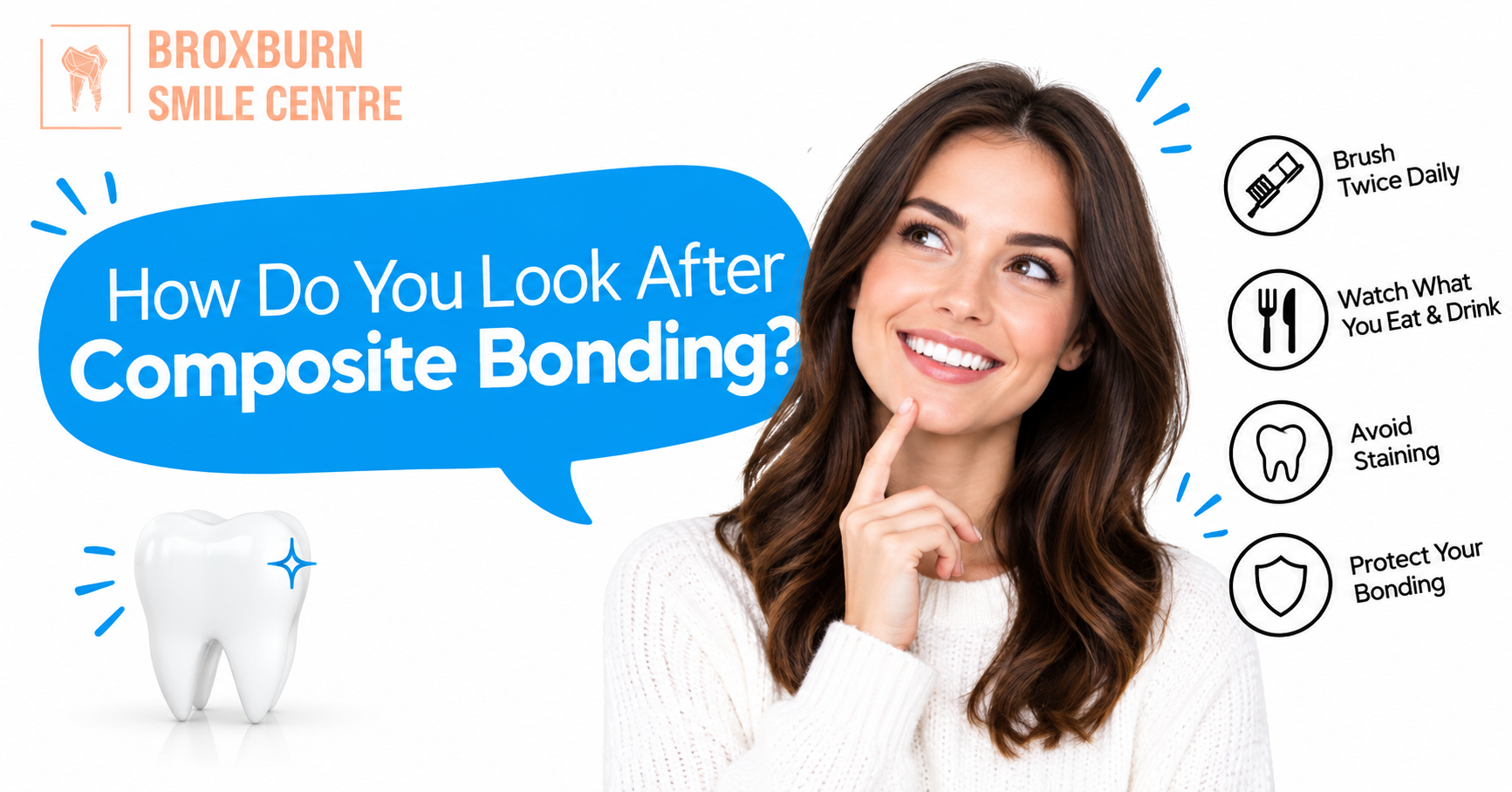
How Do You Look After Composite Bonding?
Composite bonding can give your smile a fresh and natural look. However, good aftercare helps keep the bonding clean, smooth and strong. You do not need a complex routine. In fact, you can care for composite bonding much like your natural teeth, with a few extra steps.
This guide explains how to look after composite bonding, what foods and habits to avoid, how to prevent stains, and what to do if your bonding chips or feels different.
What Is Composite Bonding?
Composite bonding is a cosmetic dental treatment that uses tooth-coloured composite resin. A dentist applies the resin to the tooth and shapes it to improve its look.
The material can help change the shape, size or colour of teeth. It can also repair small chips and gaps.
Once the resin has been shaped, the dentist hardens it with a special light. The tooth is then polished to give it a smooth finish.
Good care matters because composite resin can stain, chip or wear over time. Therefore, simple daily habits can help your bonding last for many years.
How Should You Care for Composite Bonding?
The best way to care for composite bonding is to keep your teeth clean and avoid habits that put too much pressure on the bonded areas.
Follow these simple steps:
- Brush your teeth twice a day.
- Use a soft-bristled toothbrush.
- Use fluoride toothpaste.
- Clean between your teeth every day.
- Limit foods and drinks that can cause stains.
- Avoid biting very hard foods with bonded teeth.
- Do not bite nails or hard objects.
- Wear a mouthguard if you grind your teeth or play contact sports.
- Visit your dentist for regular check-ups.
These steps are simple. However, they can make a big difference to the look and life of your composite bonding.
What Should You Do After Composite Bonding?
Your dentist may give you specific advice after your treatment. Always follow those instructions first.
You may notice that your teeth feel a little different at first. This can happen because the shape of the teeth has changed.
You may also notice mild sensitivity. This is often temporary. However, speak to your dentist if pain becomes severe, gets worse or does not settle.
It is also wise to take care when eating at first. If your mouth still feels numb, avoid eating until the feeling returns. This helps prevent accidental bites to your cheek or tongue.
If your dentist gives you different instructions, follow their advice. Your aftercare may depend on the teeth treated and the type of treatment you received.
How Should You Brush Composite Bonding?
You should brush composite bonding twice a day, just as you do with natural teeth.
Use a soft-bristled toothbrush and fluoride toothpaste. Brush gently around the bonded areas. There is no need to scrub hard.
Strong brushing can irritate your gums. It may also cause wear around the edges of the bonding over time.
Electric and manual toothbrushes can both work well. The key is to use a gentle technique and clean all tooth surfaces.
Do not forget your gum line. Plaque can build up around the edges of composite bonding. Therefore, good gum care is important too.
Should You Floss Around Composite Bonding?
Yes. Daily flossing is an important part of composite bonding aftercare.
Floss helps remove food and plaque from between your teeth. This can help protect your gums and reduce the risk of tooth decay.
Be gentle when cleaning between bonded teeth. Do not snap the floss down against your gums.
If you find flossing difficult, ask your dental team about other interdental cleaning options.
Which Foods Can Stain Composite Bonding?
Composite bonding can pick up stains over time. It is not as stain-resistant as natural enamel or some types of porcelain.
You do not need to avoid every coloured food. Instead, try to limit frequent exposure to strong staining foods and drinks.
Common examples include:
- Coffee
- Tea
- Red wine
- Cola
- Curry
- Tomato-based sauces
- Dark berries
- Some strongly coloured foods
However, good habits can help. For example, rinse your mouth with water after a staining drink. Also, avoid slowly sipping coffee or tea for hours.
Regular brushing and professional dental cleaning can also help keep your smile looking fresh.
Can You Drink Coffee After Composite Bonding?
You can usually continue to drink coffee after composite bonding. However, coffee can stain composite resin over time.
If you drink coffee often, try to reduce how long it stays in contact with your teeth. Drinking water afterwards can also help.
Do not brush straight after acidic drinks. Instead, give your mouth some time before brushing.
Your dentist can give you more specific advice based on your treatment.
Can You Smoke After Composite Bonding?
Smoking can stain composite bonding and natural teeth. It can also affect your general oral health.
Therefore, avoiding smoking is one of the best ways to protect your smile.
Vaping can also expose your mouth to substances that may affect oral health. If you smoke or vape, speak to your dental team about ways to protect your teeth and gums.
What Foods Should You Avoid With Composite Bonding?
You can eat a normal diet with composite bonding. However, some foods can place extra pressure on the resin.
Try to be careful with:
- Ice
- Very hard sweets
- Hard nuts
- Extremely crunchy foods
- Sticky sweets
- Hard crusts
You do not always need to remove these foods from your diet. Instead, avoid biting very hard foods directly with your front bonded teeth.
Cut harder foods into smaller pieces when needed. This can reduce pressure on the bonding.
Which Habits Can Damage Composite Bonding?
Some everyday habits can put your bonding at risk.
Avoid using your teeth to:
- Open packets
- Tear tape
- Bite pens
- Chew pencils
- Bite your nails
- Crack nuts
- Open bottle caps
These habits can place sudden pressure on the composite. As a result, the bonding may chip or break.
If you grind or clench your teeth, tell your dentist. You may benefit from a custom mouthguard, especially at night.
Can You Whiten Composite Bonding?
Composite bonding does not whiten in the same way as natural teeth.
Teeth whitening can lighten natural tooth enamel. However, it does not change the colour of existing composite resin in the same way.
Therefore, it is important to discuss whitening before having new composite bonding if you want a lighter smile.
If you already have bonding and want to whiten your teeth, speak to your dentist first. They can check the colour of your natural teeth and bonding and explain your options.
How Can You Protect Composite Bonding From Chips?
Composite bonding can chip if it receives too much force. Therefore, protecting your teeth from strong pressure is important.
If you grind your teeth, ask your dentist about a nightguard.
If you play contact sports, consider using a suitable sports mouthguard.
Also, avoid biting hard objects. This includes pens, ice and fingernails.
Good oral hygiene matters too. Healthy teeth and gums provide a better foundation for your smile.
How Long Does Composite Bonding Last?
Composite bonding can last for several years. However, there is no exact lifespan for everyone.
The lifespan can depend on:
- Your bite
- Your oral hygiene
- The teeth treated
- Your diet
- Teeth grinding
- Nail biting
- Other habits
- How well you protect the bonding
With good care, you can help your composite bonding stay in good condition for longer.
However, bonding may eventually need polishing, repair or replacement. Regular dental visits can help your dentist spot small problems early.
What If Your Composite Bonding Chips?
Do not panic if your composite bonding chips.
First, avoid biting hard foods with the affected tooth. Then contact your dentist for advice.
A small chip may sometimes need only a simple repair or polish. A larger chip may need more treatment.
Do not try to file or fix the bonding yourself. This can damage the tooth or change your bite.
If the chipped area feels sharp, take care when eating until your dentist can check it.
When Should You Contact Your Dentist?
Some changes can happen after composite bonding. However, certain symptoms need professional advice.
Contact your dentist if you notice:
- Severe or increasing pain
- Strong or lasting sensitivity
- A large chip
- A loose piece of bonding
- A sharp edge
- A major change in your bite
- Swelling around the tooth
- New tooth damage
Early advice can help prevent a small problem from becoming a bigger one.
Composite Bonding Aftercare: Simple Daily Checklist
Use this quick checklist to protect your bonding:
- Brush twice a day.
- Use fluoride toothpaste.
- Choose a soft toothbrush.
- Floss or clean between your teeth daily.
- Drink water after staining drinks.
- Limit smoking.
- Avoid biting hard objects.
- Do not use teeth as tools.
- Protect your teeth from grinding.
- Wear a sports mouthguard when needed.
- Attend regular dental check-ups.
- Contact your dentist if your bonding chips or feels unusual.
The key is consistency. You do not need a difficult routine. Small daily habits can help your bonding stay clean and attractive.
Frequently Asked Questions
Can I eat normally after composite bonding?
In most cases, you can return to a normal diet after treatment. However, follow your dentist’s specific instructions and take care with very hard foods.
Can I brush my teeth after composite bonding?
Yes. You should continue brushing twice a day with fluoride toothpaste and a soft-bristled toothbrush. Brush gently around the bonded teeth.
Can composite bonding stain?
Yes. Composite resin can stain over time. Coffee, tea, red wine, smoking and strongly coloured foods can contribute to staining.
Can I drink tea and coffee with composite bonding?
Yes, but both can contribute to staining. Try to limit frequent exposure and drink water afterwards.
Can composite bonding be whitened?
Whitening does not lighten composite resin in the same way it lightens natural teeth. Speak to your dentist before whitening if you have bonded teeth.
How long does composite bonding last?
Composite bonding can last for several years, but the lifespan varies. Your bite, oral hygiene, diet and habits can all affect how long it lasts.
What happens if composite bonding chips?
Contact your dentist. A small chip may need a simple repair or polish, while a larger problem may need further treatment.
Looking After Your Smile With Broxburn Smile Centre
Good composite bonding aftercare does not have to be difficult. Brush gently, clean between your teeth, limit staining habits and protect your teeth from hard pressure. Most importantly, keep up with regular dental care.
At Broxburn Smile Centre, you can get professional advice about caring for your smile and maintaining your composite bonding. If you notice a chip, change in your bite, sensitivity or another concern, our dental team can assess the problem and explain the right next step.
A little care each day can help your composite bonding stay looking natural and feeling comfortable for longer.
Final Thoughts
Composite bonding can be a simple way to improve the appearance of your smile. However, it still needs proper care.
Keep your teeth clean. Be careful with hard foods. Avoid biting objects and protect your teeth if you grind them. Also, remember that staining can build up over time.
Finally, attend regular dental check-ups. Your dentist can check your teeth, gums and bonding and spot problems early.
At Broxburn Smile Centre, our dental team can help you keep your composite bonding in good condition with the right care and advice. With a simple routine and good habits, you can help your composite bonding stay healthy, smooth and attractive for years to come.
Also read: How Often Should You See a Dental Hygienist?