What Are All-on-4 Dental Implants? A Simple Guide
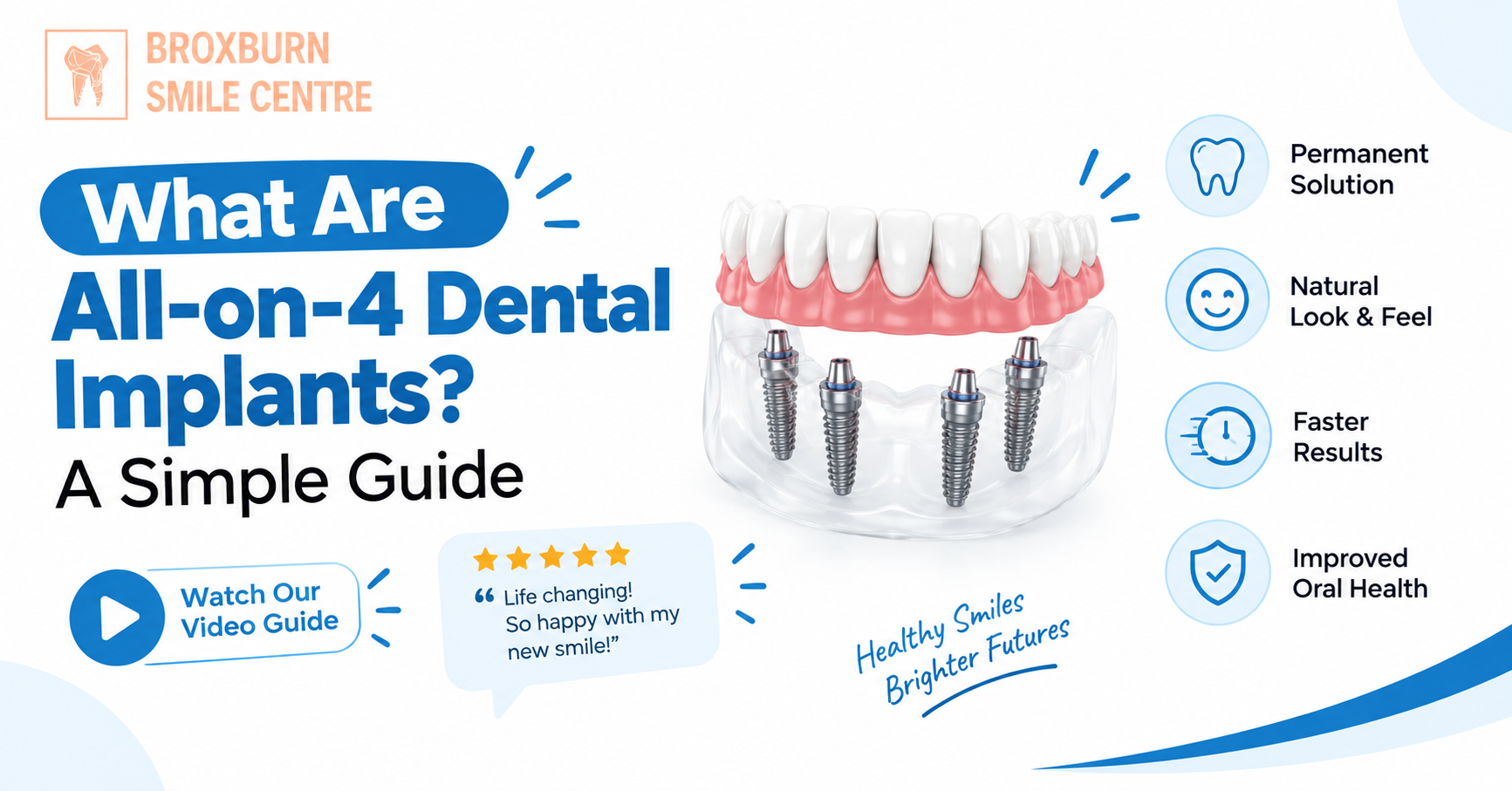
All-on-4 dental implants are a fixed, permanent full-arch tooth replacement held in place by just four implants per jaw, rather than one implant per missing tooth. Two implants sit at the front of the jaw and two angle towards the back, often avoiding the need for bone grafting.
Missing most or all of your teeth changes daily life. All-on-4 dental implants offer a fixed, permanent solution, using just four implants per jaw. This guide explains exactly what All-on-4 involves, who it suits, and what to expect from start to finish.
All-on-4 is a full set of fixed replacement teeth, held in place by just four dental implants per jaw. Instead of replacing each tooth individually, one implant-supported bridge replaces an entire row. In short, it gives you a complete, permanent smile without needing a separate implant for every missing tooth.
Decades of dental implant research shaped All-on-4. Dentists refined the technique and gave it its name in 2003. All-on-4 is a registered trademark, originally developed by Nobel Biocare, though the same general technique is now offered by many dental teams. Two implants sit at the front of the jaw, where bone is naturally strongest. The other two angle towards the back, making use of bone that would otherwise be too thin to support a straight implant.
Why All-on-4 Matters for Extensive Tooth Loss
Here is why All-on-4 matters so much for patients with extensive tooth loss:
- Traditional implants often need eight or more per jaw, meaning more surgery and more healing time
- Dentures rest on the gums, so they can move, slip, and gradually change fit as the jawbone shrinks
- All-on-4 uses far fewer implants while still supporting a full, fixed bridge
- The angled back implants often avoid the need for separate bone grafting surgery
- Patients typically leave with a temporary fixed bridge fitted on the same day as surgery
As a result, All-on-4 sits in a genuinely useful middle ground. It avoids the drawbacks of loose dentures, without requiring the number of implants traditional full-arch treatment usually needs.
Picture a patient who has struggled with loose dentures for years, avoiding certain foods and feeling self-conscious when speaking. All-on-4 offers a genuinely different starting point. Four implants, one fixed bridge, and a smile that stays put, without the daily compromises dentures often bring.
What Are All-on-4 Dental Implants?
All-on-4 dental implants replace an entire arch of teeth using just four implants, topped with one fixed bridge. Two implants go in at the front of the jaw. Two more angle towards the back, making use of stronger, denser bone in that area.
This angled placement is the real innovation behind All-on-4. It lets dentists avoid weaker areas of bone. This includes the sinus cavities in the upper jaw and the nerve canal in the lower jaw. Often, this means patients avoid bone grafting altogether.
How All-on-4 Dental Implants Work
Each implant is a small titanium post, acting as an artificial tooth root. Once placed, your jawbone gradually fuses around it, a process dentists call osseointegration. Over time, the implant becomes a stable, secure part of your jaw.
With All-on-4, your dentist attaches a temporary fixed bridge to the implants on the same day as surgery. This means you are never left without teeth while healing takes place. After a healing period, typically three to six months, your dentist fits your permanent bridge once the implants have fully bonded with the bone.
Depending on how much bone and tissue needs replacing, your dentist may plan things differently. Some patients need a bridge that replaces the crowns alone. Others need one that also replaces some lost gum and bone structure. Your dentist will explain which approach suits you during your assessment.
Who Is a Good Candidate for All-on-4?
All-on-4 tends to suit patients who have lost most or all of their teeth, or who are likely to lose them soon. It can also suit patients already wearing dentures who find them slipping or uncomfortable.
Because the implants sit at an angle, All-on-4 can work well even for patients who have been told they lack enough bone for traditional implants. For patients with very limited bone, other options such as zygomatic implants, anchored higher into the cheekbone, may be considered instead.
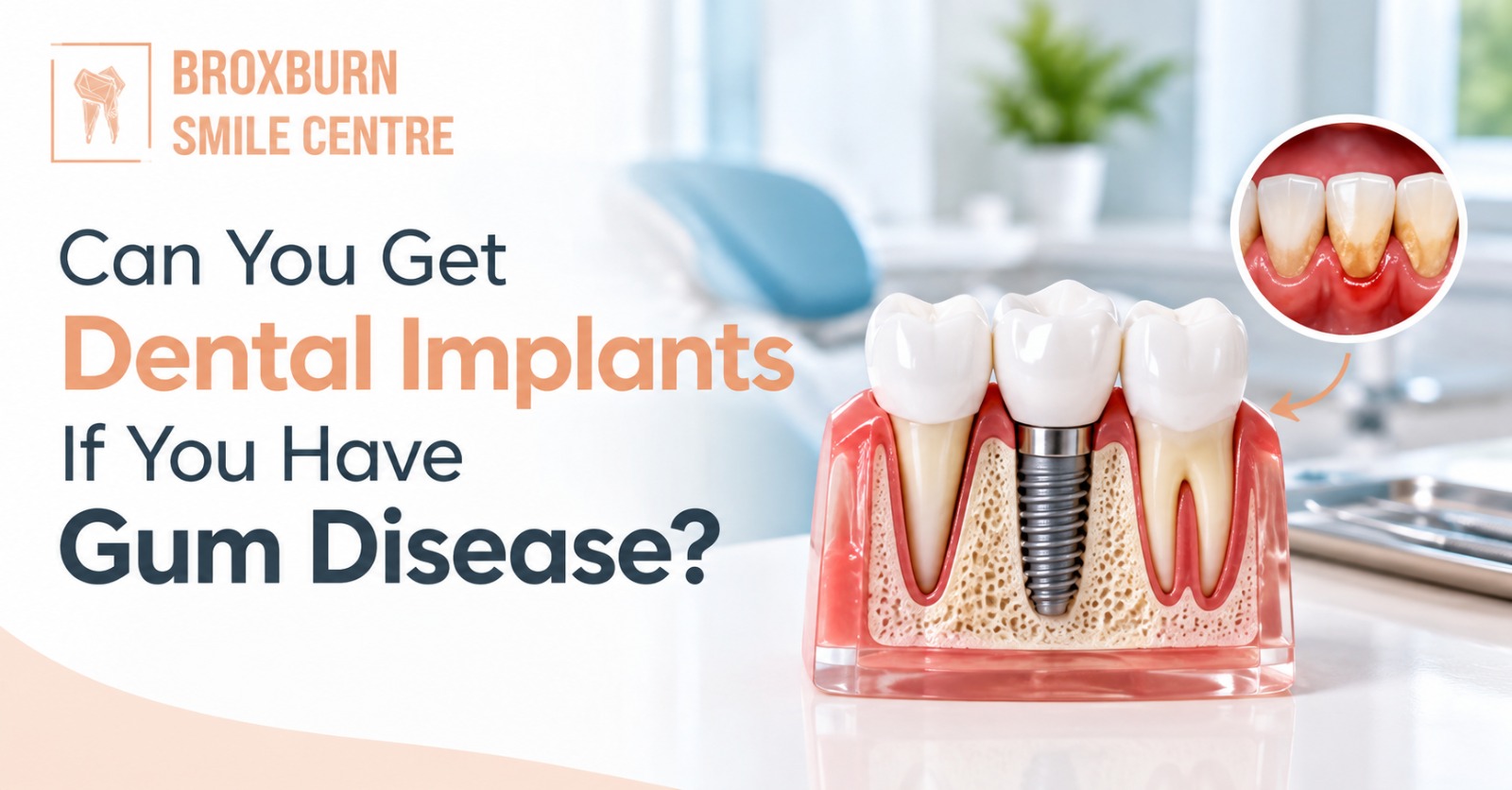
Good gum health matters for candidacy, and smoking can slow healing considerably. Every patient needs a proper assessment before treatment begins, since suitability genuinely varies from person to person.
The All-on-4 Treatment Process
Follow this general process to understand what All-on-4 treatment usually involves, from first consultation to your final bridge.
Step 1: Full consultation and assessment. Scans and X-rays give your dentist a clear picture of your jaw, gum health, and bone density.
Step 2: Surgery day itself. Your dentist removes any remaining failing teeth and places the four implants.
Step 3: Fitting your temporary bridge. This happens on the same day as surgery, so you are never left without teeth.
Step 4: The healing phase. Over several months, the implants bond fully with your jawbone while you eat softer foods.
Step 5: Fitting your final, permanent bridge, once healing is complete and your dentist confirms stability.
Aftercare matters just as much as the surgery itself. Brush your implants as you would natural teeth, use any recommended flossing tools, and attend every follow-up appointment. Regular check-ups let your dentist monitor the bridge, the implants, and your surrounding gum health properly.
All-on-4 Compared With Other Options
Understanding how All-on-4 differs from other treatments helps you weigh up what suits you best.
| Feature | All-on-4 | Traditional Implants | Dentures |
| Implants needed | 4 per arch | 8 or more per arch | None |
| Stability | Fixed, no movement | Fixed | Can slip or loosen |
| Bone health | Helps preserve bone | Helps preserve bone | Bone loss continues |
| Treatment time | Fixed bridge same day | Often multiple surgeries | Immediate |
Dentures rest on the gums rather than the bone, so they naturally move during eating and speaking. All-on-4 stays fixed in place, much like natural teeth.
Honest Considerations Before You Decide
All-on-4 has a strong, well-documented success record, though it is worth understanding a few honest realities before committing.
Most complications reported with All-on-4 are mechanical, not biological. This usually means the odd repair to the bridge itself. It rarely means the implants have failed. Long-term studies mostly come from the teams who first developed the technique. Independent, long-term research is still growing. This does not undermine the treatment. It simply means realistic expectations matter. So does a dentist willing to discuss both benefits and limitations honestly.
Key Benefits of All-on-4 Dental Implants
All-on-4 brings real, practical advantages for patients with extensive tooth loss. For example:
- Fixed, stable teeth. No slipping, no movement, and no need for denture adhesive.
- Fewer implants needed. Four implants support a full arch, rather than eight or more.
- Same-day fixed bridge. You are never left without teeth during healing.
- Bone preservation. Implants help slow the bone loss that dentures cannot prevent.
- Often avoids bone grafting. The angled back implants make use of existing bone more effectively.
Altogether, these benefits explain why All-on-4 has become such a widely used option for extensive tooth loss.
Frequently Asked Questions
What is the main benefit of All-on-4 over dentures?
All-on-4 stays fixed in place permanently, while dentures rest on the gums and can slip or move during eating and speaking.
Does All-on-4 require bone grafting?
Often not. The angled back implants make use of stronger, existing bone, which frequently avoids the need for separate grafting surgery.
How long does All-on-4 treatment take?
Surgery and a temporary bridge typically happen on the same day. The permanent bridge usually follows after three to six months of healing.
Is All-on-4 painful?
Your dentist carries out the procedure under anaesthetic, and some swelling or tenderness afterwards is normal. This usually settles within a few days.
How long do All-on-4 implants last?
With good care, the implants themselves can last many years, often decades. The bridge may need replacing at some point due to normal wear.
Can smokers have All-on-4 implants?
It is often possible, though smoking can slow healing and affect long-term success. Your dentist will discuss this honestly during assessment.
Wondering If All-on-4 Is Right for You?
Losing most or all of your teeth does not mean living with loose dentures forever. Broxburn Smile Centre offers thorough assessments for patients considering All-on-4, whether through the NHS or privately. Every patient’s situation is different, so a proper assessment is the only way to know what genuinely suits you. Get in touch today, and let’s talk through whether All-on-4 could be the right option for your smile.
Also read: How Do You Look After Composite Bonding?