Why No Dairy After a Dental Implant?
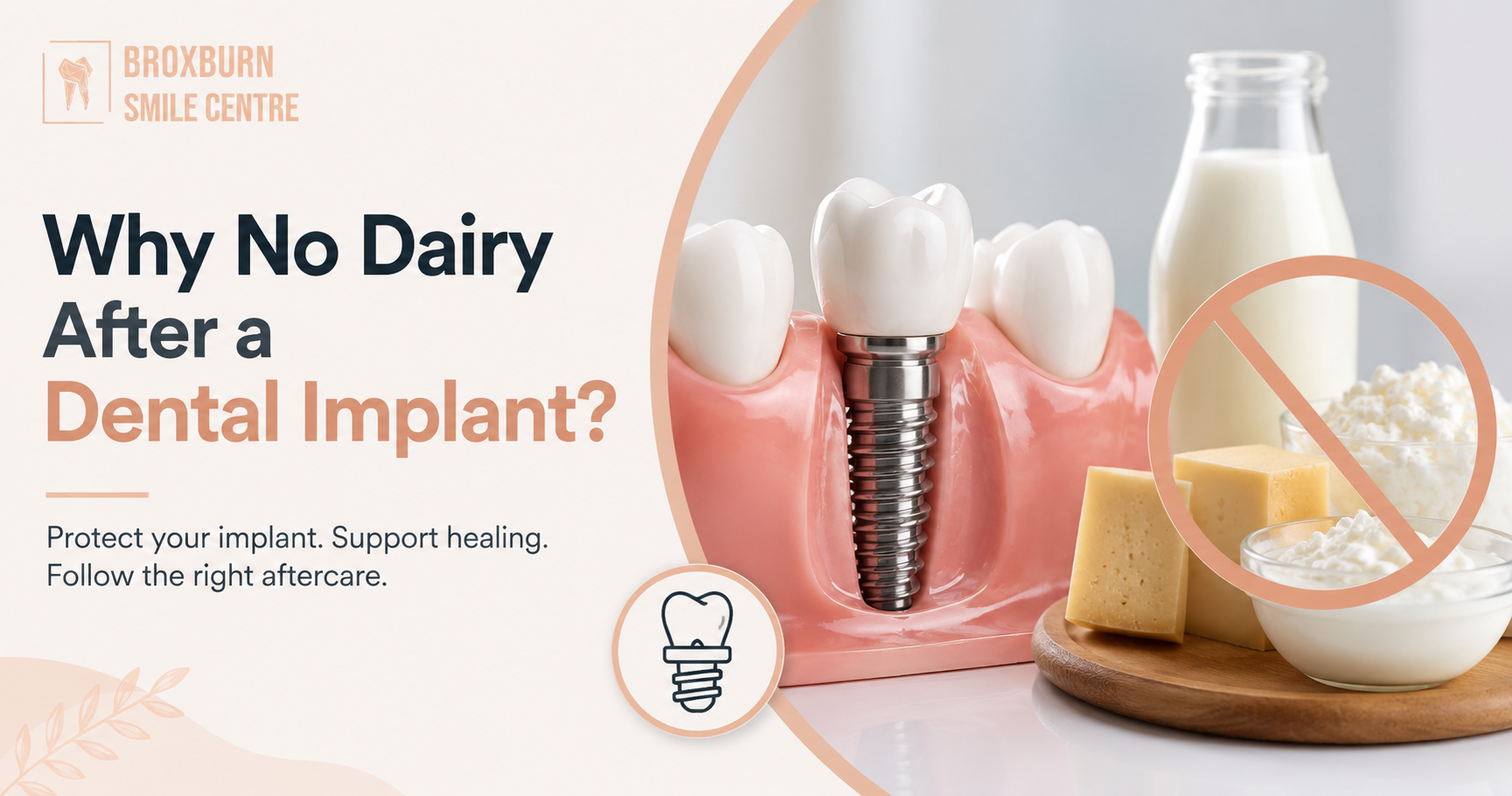
| Dentists advise against dairy in the first few days after a dental implant because dairy can raise infection risk, slow blood clot formation, and reduce how well certain antibiotics work. Most patients should avoid dairy for around three to seven days after surgery, though the exact time depends on healing and any medicine prescribed. |
Getting a dental implant is a big step towards a healthier smile. However, what you eat in the days after surgery matters just as much as the treatment itself. Many patients are told to avoid dairy straight after their implant. This guide explains why, for how long, and what to eat instead while your mouth heals.
What Does “No Dairy After a Dental Implant” Actually Mean?
“No dairy” simply means cutting out milk, cheese, yoghurt, cream, and butter for a short period after implant surgery. It is not a lifelong rule. Instead, it is a short, precautionary step that supports healing while your gum and jawbone settle around the new implant. During this early stage, your body is working hard to fuse the implant to the bone, a process dentists call osseointegration. Most dental teams lift the dairy restriction once the surgical site shows clear signs of early healing. It’s worth remembering that every mouth heals at its own pace. Consequently, your dentist may shorten or lengthen this period based on how your particular recovery is going, rather than applying a strict rule to every patient in exactly the same way.
Why Dentists Advise Against Dairy After an Implant
There are several reasons behind this advice, and together they explain why so many dental teams repeat it. It’s worth noting that the science here is still developing. Because of this, most of these points are sensible precautions rather than firmly proven rules. Even so, they’re worth following closely while your mouth heals.
- Infection risk: Dairy naturally contains bacteria. Although this bacteria is harmless in daily life, it can be unhelpful near a fresh surgical wound. As a result, many dentists prefer patients avoid dairy during early healing, when the gum tissue is most vulnerable.
- Blood clot disruption: A blood clot forms over the implant site straight after surgery. This clot protects the wound and supports bone healing underneath. Some dentists believe calcium-rich dairy can interfere with clot formation, though evidence for this is still limited and researchers continue to study it.
- Antibiotic interaction: If you’re prescribed tetracycline-type antibiotics after your implant, dairy can bind with the calcium in these drugs. As a result, your body absorbs less of the medicine, so it works less effectively against infection. Because of this, it’s sensible to keep dairy and this type of antibiotic well apart, ideally by a couple of hours.
- Inflammation: Full-fat or heavily processed dairy products can trigger mild inflammation in some people. Since swelling is already common after implant surgery, dentists often suggest avoiding anything that could add to it, even slightly.
- Digestive discomfort: Dairy, combined with pain relief or antibiotics, can sometimes cause nausea or an upset stomach. Consequently, many patients find plain, gentle foods much easier to manage in the first few days after treatment.
Is This Advice Backed by Strong Evidence?
It’s a fair question, and an honest one deserves an honest answer. Large-scale clinical trials on dairy and dental implants are still limited. Most of the advice above comes from general wound-care principles, alongside years of practical experience from dentists observing how patients heal. This doesn’t mean the advice is weak. Rather, it means the guidance is cautious by design, aimed at giving your implant the best possible start. Because implant surgery isn’t fully reversible once bone has fused around the fixture, most dentists would rather ask patients to avoid a few foods for a week than risk any unnecessary setback. In short, the dairy-free period is a sensible safety margin, not scaremongering.
How to Avoid Dairy After Your Implant: A Simple Step-by-Step Guide
Following a clear plan makes recovery far easier, and it also removes the guesswork. Here is a straightforward approach that most dentists recommend to their implant patients.
Step One: Days One to Three
Avoid all dairy completely during this early stage, since the wound is at its most delicate. Stick to soft, non-dairy foods such as mashed potato, scrambled eggs, or blended vegetable soup. Additionally, drink plenty of water throughout the day to stay properly hydrated.
Step Two: Days Three to Seven
As swelling settles, you can slowly widen your diet. Continue to skip dairy during this stage, but introduce soft foods like oats made with plant milk, soft fruit, and well-cooked pasta. Chew gently and avoid the implant site where possible.
Step Three: After One Week
Check with your dentist before reintroducing dairy, especially if you’re still taking antibiotics at this point. Once you get the go-ahead, start gently with a small amount, such as a spoonful of yoghurt, rather than a large glass of milk straightaway.
Step Four: Watch for Warning Signs
Throughout recovery, keep an eye out for increasing pain, swelling, or an unusual taste near the implant site. If any of these appear, contact your dentist straightaway rather than waiting to see if they pass on their own.
Key Benefits of Following This Advice
Sticking to a short dairy-free period brings real, practical advantages for your recovery.
- Lower infection risk around the new implant site
- Better protection for the blood clot during early healing
- Full effectiveness from antibiotics, if they’re prescribed
- Reduced swelling and discomfort in the first few days
- A smoother, more predictable recovery overall
- Greater confidence that your implant is settling correctly
- Fewer follow-up visits caused by avoidable complications
Frequently Asked Questions
How long should I avoid dairy after a dental implant?
Most dentists recommend avoiding dairy for three to seven days. However, your dentist may extend this if you’re taking certain antibiotics or healing more slowly than usual.
Can I eat yoghurt after a dental implant?
It’s best to wait until early healing has begun, usually after the first few days. Plain yoghurt in small amounts is generally gentler than hard cheese or ice cream.
Why can’t I drink milk with my antibiotics?
Calcium in milk can bind with certain antibiotics, such as tetracycline, meaning your body absorbs less of the medicine. Therefore, it’s wise to leave a gap of a few hours between dairy and these tablets.
Is ice cream worse than other dairy products?
Ice cream combines dairy with very cold temperatures, which can irritate a sensitive surgical site. For this reason, many dentists suggest avoiding it slightly longer than other, milder dairy foods.
What can I eat instead of dairy after my implant?
Soft, non-dairy foods work well, including mashed potato, scrambled eggs, plant-based milk, soft fruit, and well-cooked vegetables. These options are gentle, nutritious, and easy to eat without much chewing.
Will avoiding dairy affect my calcium intake?
Not if you plan ahead. Leafy greens, fortified plant milks, and calcium-set tofu all provide calcium without the drawbacks of dairy during early healing.
What happens if I accidentally have dairy too soon?
Try not to worry. A single small slip rarely causes lasting harm. However, keep a close eye on the implant site over the next day or two, and mention it to your dentist if you notice any swelling, pain, or discharge.
Does this rule apply to bone graft patients too?
Yes, often for longer. If you’ve had a bone graft alongside your implant, your dentist may extend the dairy-free period, since bone graft sites generally need extra time and care to heal fully.
| Need Advice on Your Dental Implant Recovery? At Broxburn Smile Centre, we understand that recovery can feel confusing, especially when advice seems to vary from patient to patient. Our team is always happy to talk you through your own personal aftercare plan, answer any questions about diet and healing, and make sure your implant settles well right from day one. We believe clear, honest guidance makes all the difference to a smooth recovery. We take the time to explain things clearly, in plain language, so you always know what to expect next. Whether you’re preparing for your first implant or you’re a few days into recovery already, our friendly team is only a phone call away. Get in touch with Broxburn Smile Centre today, and we’ll support you through every step of your journey, from surgery day right through to your first check-up. |