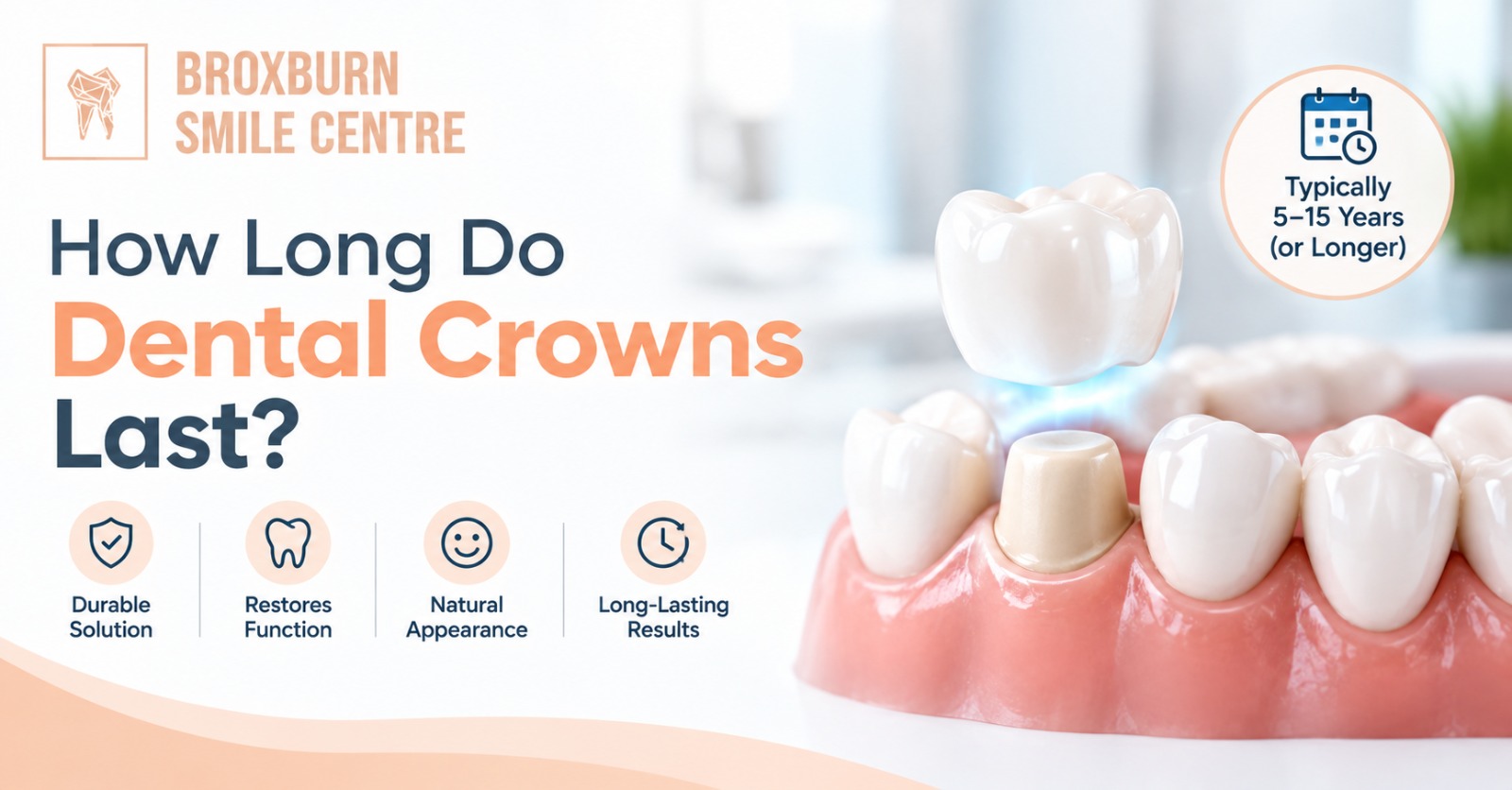
How Long Do Dental Crowns Last? | Broxburn Guide
Most dental crowns last between 10 and 15 years. Some materials, such as zirconia and gold, can last 20 to 30 years with good care. Lifespan depends on the crown material, oral hygiene, and daily habits like teeth grinding.
A dental crown protects a damaged or weak tooth. Many patients want to know how long a crown will actually last. This guide gives clear numbers by material. It also explains what helps a crown last longer and what signs mean it needs attention.
What Is A Dental Crown?
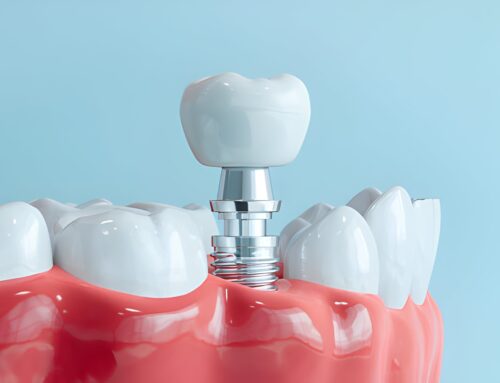
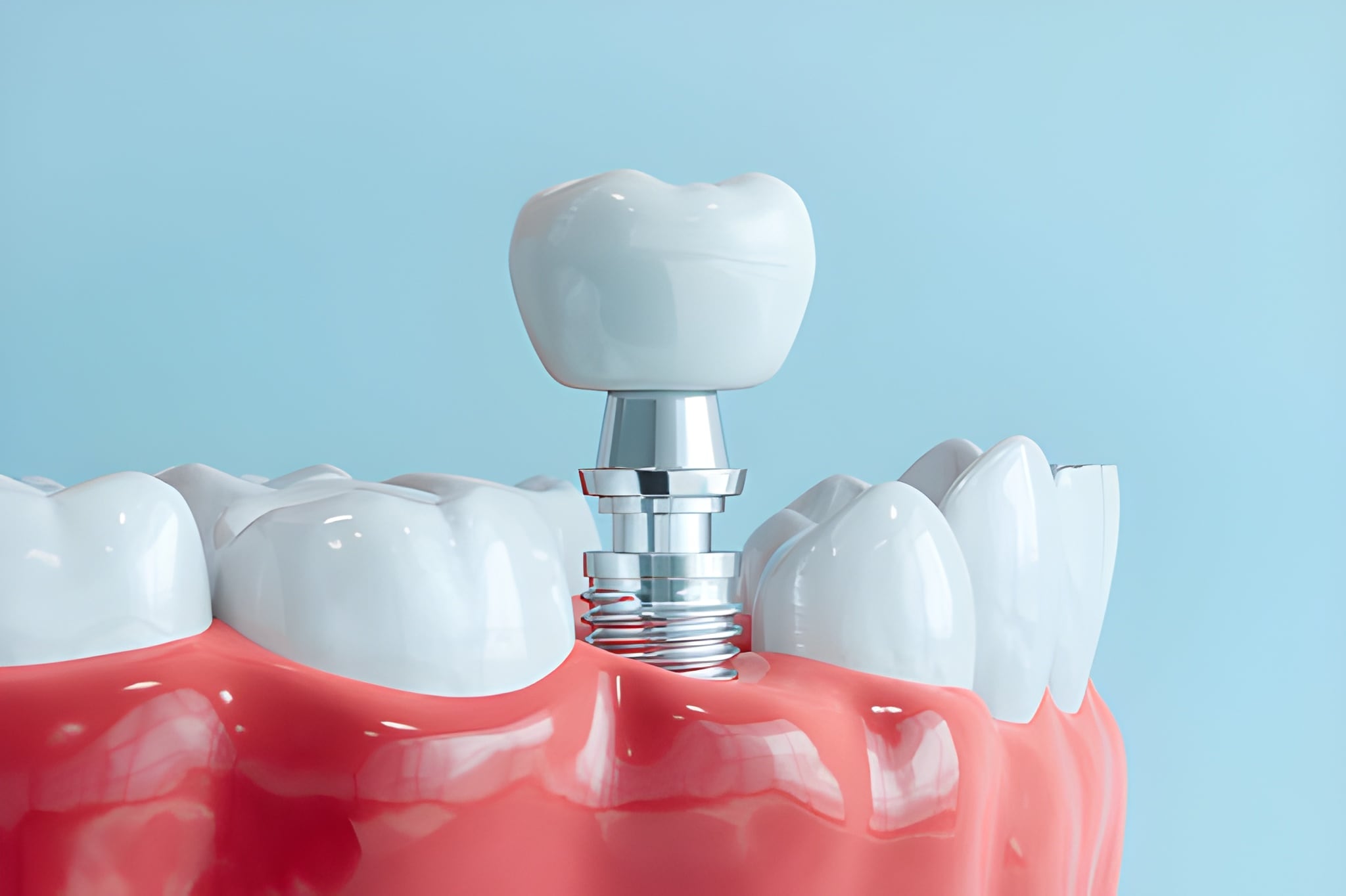
A dental crown is a cap that fits over a damaged tooth. It restores the tooth’s shape, strength, and appearance. Dentists use crowns after large fillings, root canals, cracks, or heavy wear.
How Long Do Dental Crowns Last?
Crown lifespan depends mostly on the material used and how well the crown is cared for. Most crowns last 10 to 15 years, though many last much longer with good care.
Here is a simple guide by material:
- Ceramic or porcelain crowns: 10 to 15 years, but can chip under heavy force
- Zirconia crowns: 15 to 25 years or more, with strong resistance to cracking
- Porcelain-fused-to-metal crowns: 10 to 15 years, though the porcelain layer may chip over time
- Lithium disilicate crowns: 10 to 15 years, with a good balance of strength and natural looks
- Gold or metal alloy crowns: 20 to 30 years, thanks to strong resistance to wear
So, the material you choose plays a big role. However, daily habits and hygiene often matter just as much.
Why It Matters
Knowing how long a crown lasts helps you plan ahead. It also helps you choose the right material for your situation, your budget, and the tooth being treated.
How It Works
A crown does not decay itself, but the tooth underneath still can. Plaque can build up where the crown meets the gum. Over time, this can lead to decay beneath the crown, which is one of the main reasons crowns fail early.
What Affects How Long A Crown Lasts?
Several everyday factors can shorten or extend the life of a crown. Understanding them helps you protect your investment.
- Oral hygiene: Brushing twice a day and flossing daily helps prevent decay around the crown edge
- Teeth grinding: Grinding or clenching places extra force on a crown and can cause cracks
- Crown position: Back teeth face higher biting force than front teeth, so wear happens faster
- Bite alignment: An uneven bite can place too much pressure on one crown
- Diet and habits: Biting hard foods, ice, or using teeth as tools can damage a crown early
- Quality of the crown: A well-fitted crown from good materials tends to last far longer
Because of this, a crown’s lifespan is rarely down to material alone. Your daily habits often make the biggest difference.
Signs A Crown May Need Attention
Even a well-made crown will not last forever. So, it helps to know the warning signs early.
- Visible chipping or cracking on the crown surface
- A dark line at the gum edge of the crown
- Increased sensitivity to hot, cold, or pressure
- Gum recession around the crown margin
- A crown that feels loose or moves slightly
- Pain in the tooth, which can point to decay underneath
- Noticeable discolouration compared to nearby teeth
If you notice any of these signs, book a dental check-up soon. Early action often means a simple repair rather than a full replacement.
Can A Crown Be Repaired Instead Of Replaced?
Yes, in many cases. If a crown has come loose but is otherwise in good condition, it can often be recemented back into place. This is a quick, simple fix. However, if there is decay underneath the crown, or the crown itself is cracked, a full replacement is usually needed. Catching problems early gives you a better chance of a simple repair.
Is A More Expensive Crown Worth It Long Term?
This is a fair question, and the answer often comes down to value over time. A higher-quality crown, made from strong materials and fitted with precision, tends to last longer and needs fewer replacements. So, while the upfront cost may be higher, it can work out more cost-effective across many years. A cheaper crown that fails early may end up costing more once replacement fees are added up.
How Long Can You Expect A Crown To Last On A Molar?
Back teeth work harder than front teeth. So, crowns on molars often face more wear over time. This is because molars handle most of the force from chewing and grinding food. As a result, material choice matters even more for back teeth. Strong materials, such as zirconia or gold, are often a good fit for molars. Front teeth, by contrast, benefit more from materials that look natural, such as ceramic or lithium disilicate.
Step-By-Step Guide: How To Make Your Crown Last Longer
Follow these simple steps to get the most life out of your crown.
Step One: Brush And Floss Daily
Brush twice a day and floss once a day. Pay close attention to the area where the crown meets the gum.
Step Two: Attend Regular Check-Ups
Visit your dentist every six months. This allows any issues to be caught early, before they become bigger problems.
Step Three: Protect Against Grinding
If you grind your teeth, ask your dentist about a night guard. This protects your crown from extra force while you sleep.
Step Four: Avoid Hard Foods And Bad Habits
Avoid biting ice, hard sweets, or using your teeth as tools. These habits place unnecessary stress on a crown.
Step Five: Watch For Warning Signs
Keep an eye out for chips, looseness, or sensitivity. Acting early often means a simple fix rather than a full replacement.
Key Benefits Of Understanding Crown Lifespan
- Helps you choose the right material for your needs and budget
- Supports better daily habits that protect your crown
- Helps you spot problems early, before they become serious
- Gives you realistic expectations before treatment begins
- Supports better long-term dental health overall
FAQs
How long do dental crowns usually last?
Most dental crowns last between 10 and 15 years. Some materials, such as zirconia and gold, can last 20 years or longer with good care.
Which crown material lasts the longest?
Gold and zirconia crowns tend to last the longest, often reaching 20 to 30 years. However, they are not always suitable for visible front teeth.
Can a crown last a lifetime?
Some crowns can last several decades with excellent care, though most will eventually need replacement due to natural wear.
What is the most common reason a crown fails early?
Decay developing beneath the crown is one of the most common causes. This usually happens due to plaque build-up at the crown’s edge.
Does grinding my teeth affect how long a crown lasts?
Yes, it does. Grinding places extra pressure on a crown and can lead to cracks or early wear. A night guard can help protect it.
Can a loose crown be fixed without replacing it?
Often, yes. If the crown itself is undamaged, it can usually be recemented. A full replacement is only needed if there is decay or damage.
Does the position of the crown in my mouth affect how long it lasts?
Yes, it does. Crowns on back teeth face more biting force than crowns on front teeth. This can lead to faster wear over time, so material choice matters more for molars.
How much does a dental crown cost?
Cost varies depending on the material and the practice. A dentist can give you a clear price once they have assessed your tooth and discussed the best material for your needs.
Book A Crown Check-Up With Broxburn Smile Centre
If you are wondering about the condition of an existing crown, or considering a new one, Broxburn Smile Centre is here to help. Our team can assess your crown, explain your options clearly, and recommend the right material for your needs. We focus on honest advice and long-term dental health, not pressure or upselling. Get in touch with Broxburn Smile Centre today to book a check-up and keep your smile in great shape for years to come.
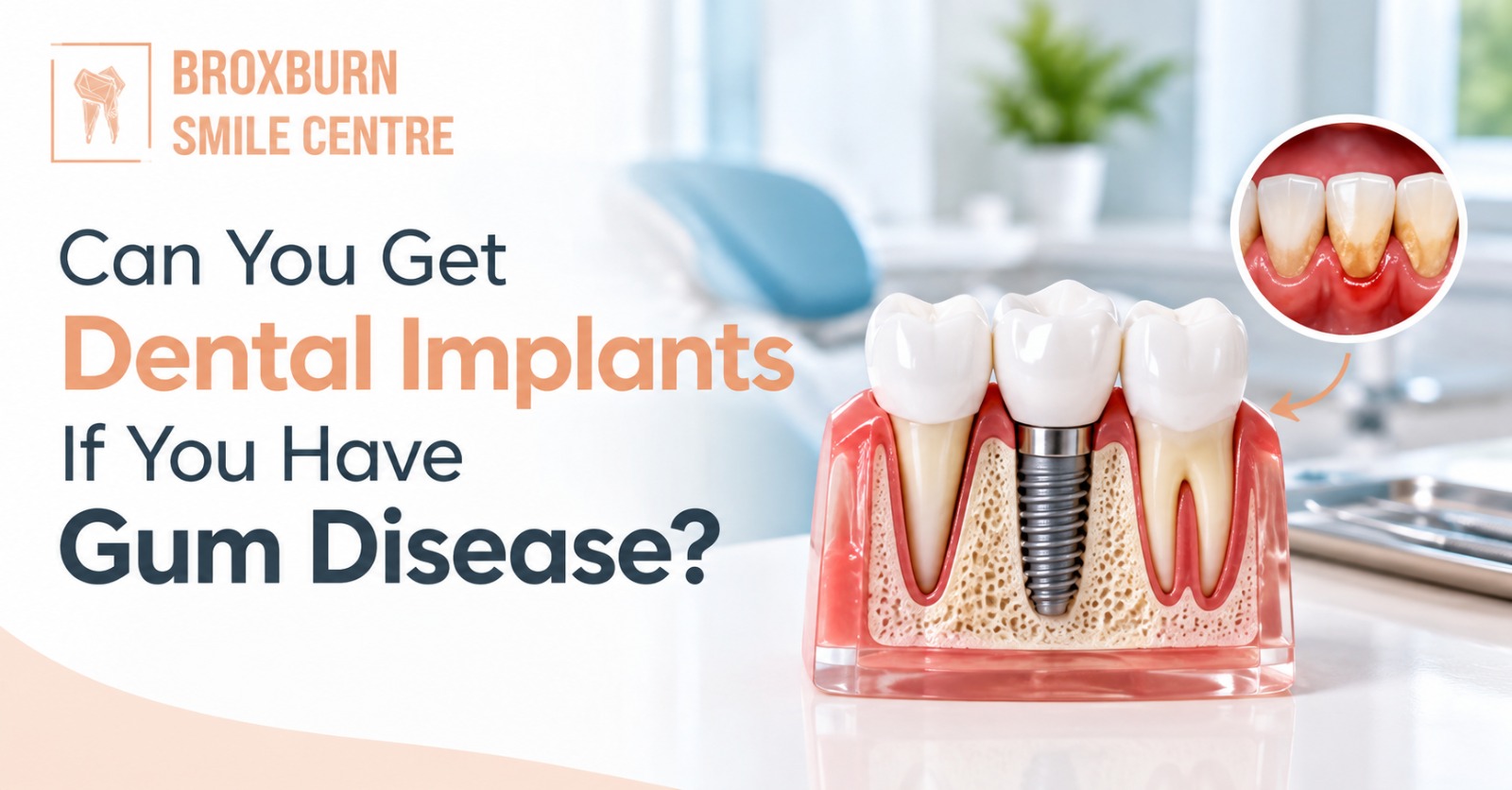
Also read : Dental Implants With Gum Disease ? Broxburn Smile Centre